Digital Logic
Course Content
- Chapter 1: Digital Logic Overview
- Chapter 2: Number Systems and Codes
- Chapter 3: Logic Gates
- Chapter 4: Boolean Algebra and Logic Simplification
- Chapter 5: Combinational Logic Circuit
- Chapter 6: Functions of Combinational Logic
- Chapter 7: Latches and Flip-Flops
- Chapter 8: Counters
- Chapter 9: Shift Registers
Coursework
Lab 1: Basic Gate
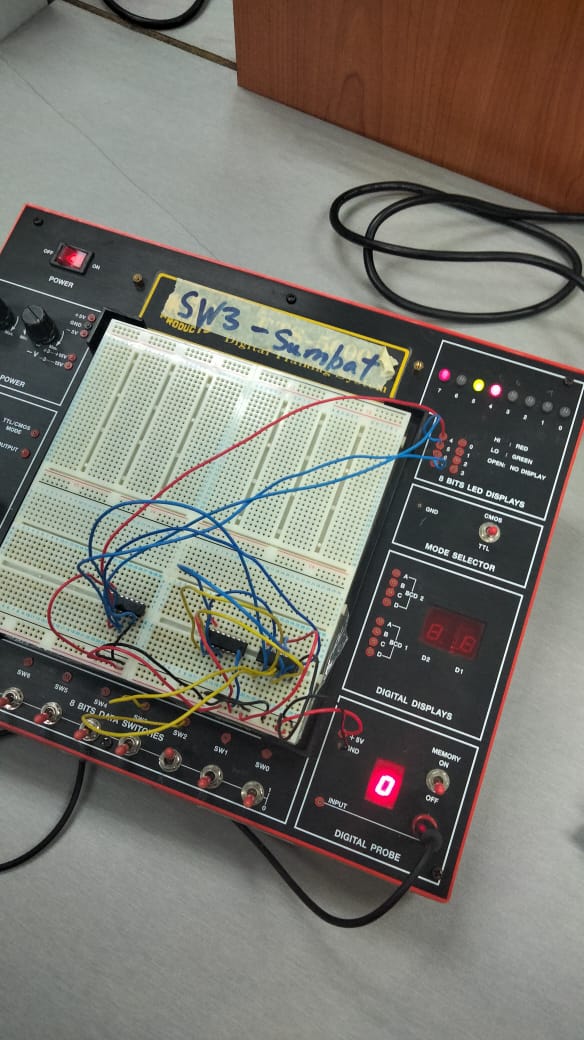
- Practicing basic breadboarding and wiring with basic gates like AND, OR, and NOT.
- Use basic gates to build NAND, XOR and XNOR logic circuits on a breadboard.
- Introduction to DEEDS
Lab 3: Sequential Logic Circuit (Counter)
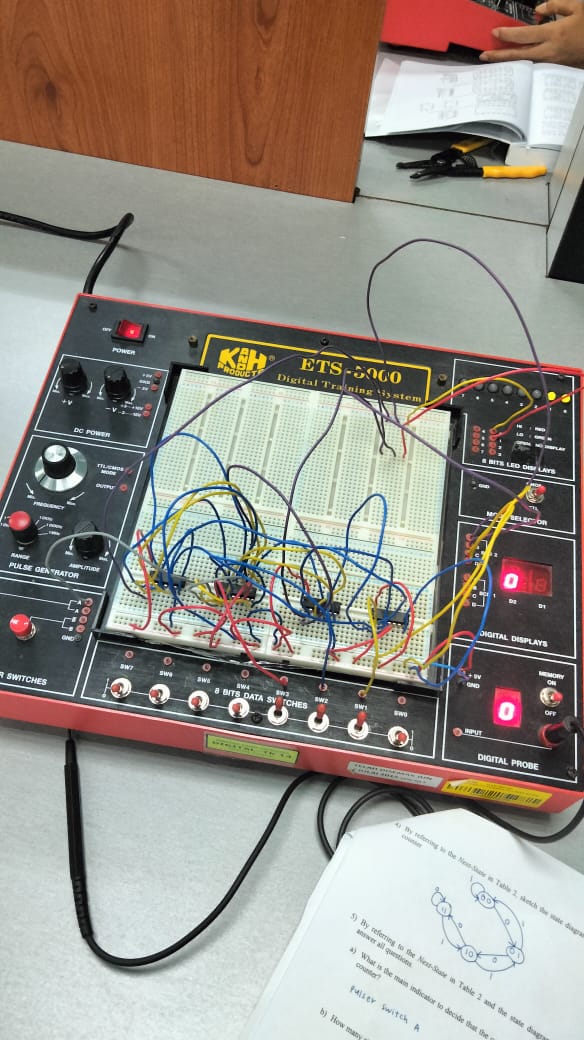
- Creating a synchronous counter circuit on a breadboard by employing flip-flops and basic gates.
- Analyzing the characteristic of the of the counter, which is asynchoronous or synchronous, counting sequence up or down or up and down, modulus and repeat counting sequence.
Lab 2: Combinational Logic Circuit (Software Deeds)
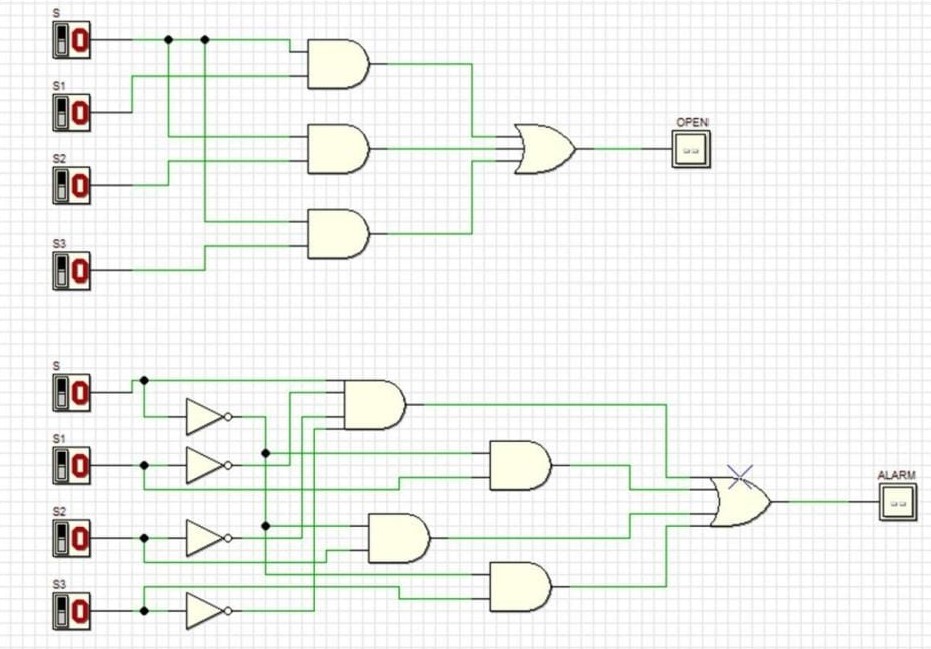
- Designing a Combinational Circuit with Deeds simulator.
- Translating logical expressions or truth tables into practical combinational circuit designs
Reflection
This course provides a comprehensive overview of digital electronics, a crucial component in microprocessor-based systems for various applications. I received information in digital fundamentals, including binary systems, circuit design, and programmable logic devices. Hands-on experience is also gained through laboratory experiments with simulator software, real devices and discussed circuits. The study of digital logic enhances my understanding and provides a foundation for logic problem solving in computer science, that focuses on Boolean algebra and gate-level operations, which provide essential skills for designing and analyzing digital circuits.